
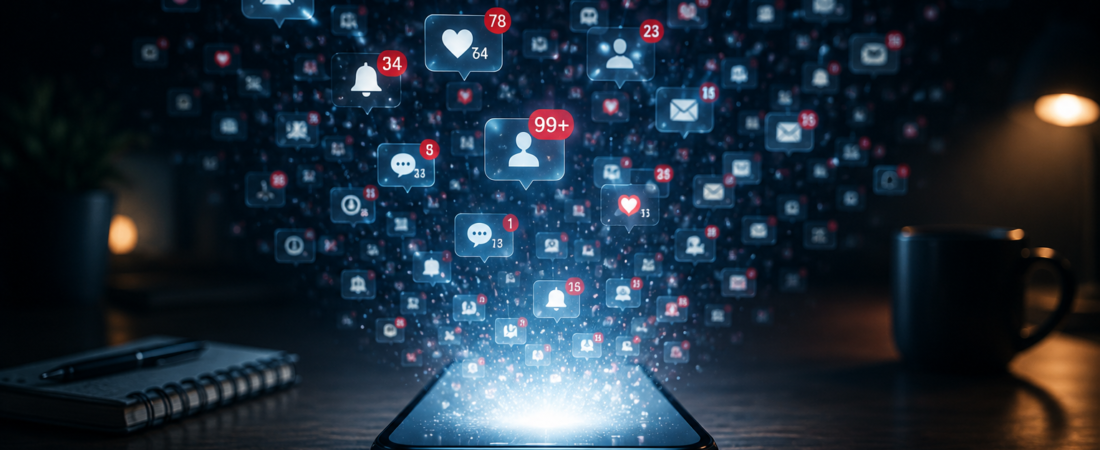
You open your phone to check one notification.
That is all it was supposed to be.
One message.
One alert.
One quick look.
Then ten minutes later, you realize you are scrolling through videos you never searched for, comparing your life to people you do not know, and forgetting why you picked up your phone in the first place.
That is why social media is destroying us in ways most people do not notice until their focus, anxiety, and attention are already affected.
That is the part that bothers me.
Social media does not always feel destructive while it is happening. Most of the time, it feels harmless. It feels normal. It feels like a quick break from stress, work, boredom, or whatever you do not want to think about in that moment.
But over time, I started noticing what it was doing to me.
It was ruining my focus.
It was wasting time.
It was increasing anxiety.
It was making normal life feel slower, less exciting, and somehow not enough.
And honestly, I do not think I am alone in that.
The danger of social media is not always obvious.
It is not always one dramatic moment where everything falls apart.
Sometimes it is quieter than that.
Sometimes it is the slow erosion of your attention, your patience, your presence, and your ability to enjoy real life without constantly reaching for stimulation.
The Phone Was Supposed To Be A Tool
Modern life constantly fights for our attention.
Notifications.
Messages.
Emails.
Videos.
Breaking news.
Short-form content.
Social media feeds.
Algorithms designed to keep us scrolling.
The phone was supposed to be a tool.
But for a lot of people, it has become something much different.
It has become the first thing they check in the morning and the last thing they look at before bed. It fills the quiet moments. It interrupts conversations. It follows people into the bathroom, the bedroom, the dinner table, the gym, and every empty space in between.
That is not normal when you really think about it.
Most people are not choosing distraction once. They are being pulled into it all day long.
And after a while, the brain adapts to that pace.
Silence starts to feel uncomfortable.
Boredom starts to feel unbearable.
Stillness starts to feel like something is missing.
That is one of the biggest reasons modern life feels so mentally exhausting. Constant stimulation, fragmented attention, and decision fatigue slowly drain people without them realizing it. I talk more about that in my article on why modern life feels mentally exhausting.
Attention Is Being Taken, Not Accidentally Lost
I think people often blame themselves for having a short attention span.
And yes, personal discipline matters.
But I also think we need to be honest about what we are up against.
Social media platforms are not designed to help you log off quickly and return to your life feeling clear and peaceful.
They are designed to keep you there.
Every notification, like, comment, reel, recommendation, and endless feed is built to pull your attention back in. The goal is not your peace. The goal is your engagement.
That matters.
Because if something is designed to keep you distracted, then protecting your attention has to become intentional.
You cannot just hope you will naturally focus better.
You have to build boundaries.
Attention is not just something we lose anymore. It is something being taken.
That is why focus feels harder now. It is not only because people are lazy or undisciplined. It is because modern life constantly rewards interruption.
And when your attention is constantly interrupted, deep thinking becomes harder.
Presence becomes harder.
Real peace becomes harder.
Social Media Speeds Up Life
One of the biggest realizations I had happened after my wife and I rented a cabin in the woods for a few days with no cell service.
No social media.
No notifications.
No constant stimulation.
No technology pulling at us every few minutes.
Just silence, nature, conversations, reading, and being present.
At first, it felt strange.
Then it started to feel peaceful.
And when we came back home, I noticed something almost immediately.
Everything felt loud again.
Fast.
Constant.
Overstimulating.
That trip made me realize something I still think about often:
Social media speeds up life.
It creates this feeling that you always need to be somewhere else, doing something else, chasing something bigger, better, faster, or more impressive.
You see someone else’s success, and suddenly your own progress feels too slow.
You see someone else’s lifestyle, and suddenly your normal day feels boring.
You see someone else’s body, relationship, money, vacation, career, home, or highlight reel, and suddenly your own life starts feeling like it is behind.
That is what social media does so quietly.
It makes people mentally rush through lives they have not even stopped to appreciate.
Sometimes I look back on past seasons of life and think:
“Those were the good times.”
But the strange part is that when I was actually living through those times, I was often too distracted, stressed, or focused on the future to fully appreciate them.
That realization changed the way I think about presence.
Because if I am not careful, I can spend my whole life chasing the next thing while missing the life that is already happening.
That is a big reason why most people never feel present anymore; their attention is constantly being pulled away from the life happening right in front of them.
Comparison Changes What Normal Feels Like
I think one of the most damaging parts of social media is how quietly it changes people’s expectations.
Everyone shows the best moments.
The best photos.
The best accomplishments.
The best vacations.
The best angles.
The best parts of their lives.
And then we compare our normal, messy, stressful, imperfect everyday lives to someone else’s highlight reel.
That is a dangerous comparison.
Because real life does not always look exciting.
Real life is work.
Bills.
Responsibilities.
Hard conversations.
Stress.
Fatigue.
Family obligations.
Self-doubt.
Bad days.
Slow progress.
But social media can make normal life feel like failure.
We compare our behind-the-scenes reality to someone else’s edited version of success.
The problem is that even the people who appear to have perfect lives online are usually dealing with many of the same things everyone else is dealing with.
Stress.
Anxiety.
Burnout.
Insecurity.
Loneliness.
Comparison.
The image may look perfect, but the person behind it is still human.
I think people would feel a lot more at peace if they remembered that more often.
Doom Scrolling Trains The Brain To Crave Noise
The hardest part about social media is how addictive it becomes.
Your brain naturally craves the quick dopamine hits from checking notifications, refreshing feeds, watching short videos, and scrolling through endless content.
The problem is that the stimulation never really satisfies you long term.
It just keeps your brain craving more.
That is what makes doom scrolling so frustrating.
You can spend 30 minutes scrolling and somehow feel worse afterward. Not rested. Not fulfilled. Not mentally clearer.
Just scattered.
I have noticed this in myself.
There have been times where I picked up my phone because I felt tired, bored, or stressed, and instead of feeling better, I felt more anxious by the time I put it down.
That is when I started becoming more intentional about notifications and quick access to apps.
One thing I noticed is that notifications almost remove some of the guilt associated with checking social media.
If a notification pops up, it feels like the phone invited you in.
But when I have to physically stop what I am doing, unlock my phone, search for the app, and open it myself, I become much more aware of the choice I am making.
That awareness matters.
The more friction I create between myself and mindless scrolling, the more control I feel over my attention.
Presence Requires Protection
One of the biggest things I have noticed since reducing social media is how much calmer and more present I feel.
I feel more focused.
More intentional.
Less anxious.
Less mentally scattered.
And honestly, I enjoy conversations more.
To me, being present means listening to understand someone instead of simply waiting for my turn to respond while thinking about something else.
That sounds simple, but I think it is becoming rare.
A lot of people are physically present but mentally somewhere else.
They are sitting across from someone, but part of their mind is on their phone. They are spending time with family, but part of their attention is waiting for the next notification. They are trying to relax, but their brain is still chasing stimulation.
That is not real presence.
Presence has to be protected now.
It does not just happen automatically in a world built to interrupt you.
That is also why mental recovery becomes so difficult when your brain is constantly overstimulated. Recovery is not separate from discipline; it is one of the things that makes discipline sustainable long term. I talk more about that in my article on why recovery is part of discipline.
Silence Started Feeling Valuable Again
Silence used to feel uncomfortable to me at times.
Now I see it differently.
I think silence is one of the most underrated things people can give themselves.
No videos.
No background noise.
No scrolling.
No constant input.
No instant reaction to every notification.
Just space.
Space to think.
Space to breathe.
Space to process.
Space to actually hear yourself again.
That may sound simple, but I think a lot of people avoid silence because silence forces them to face what constant stimulation helps them ignore.
Stress.
Uncertainty.
Discomfort.
Loneliness.
Lack of direction.
Anxiety.
Social media can become an escape from those things.
But escape is not the same as peace.
A quiet mind is not built by constantly feeding it noise.
Discipline And Self-Awareness Matter
At the end of the day, reducing social media comes down to discipline and self-awareness.
That does not mean I never use social media.
It does not mean social media is entirely bad.
It means I have to be honest about how it affects me.
Once I started paying attention to how social media affected my focus, mood, anxiety, and mental clarity, it became easier to create better boundaries.
Not perfect boundaries.
Better ones.
I turned off notifications.
I reduced quick access.
I became more aware of when I was opening apps out of habit.
I started asking myself why I was reaching for my phone in the first place.
Those small changes helped.
A lot of improving habits like this comes down to discipline rather than temporary motivation. I dive deeper into that idea in my article on why discipline beats motivation.
Because the truth is, you are not always going to feel motivated to protect your attention.
Sometimes you have to choose it anyway.
That is one reason discipline creates freedom; it gives you more control over your attention instead of letting every impulse, notification, or distraction decide for you.
Discipline is what protects your attention when distraction feels easier.
Final Thoughts
I do not think social media is entirely bad.
It can connect people.
It can teach people.
It can inspire people.
It can help build communities, businesses, and ideas.
But I do think constant overstimulation, comparison, notifications, and fragmented attention are quietly damaging people’s ability to focus, think deeply, and stay present in their own lives.
Modern life already moves fast enough.
We do not need endless stimulation speeding it up even more.
I think one of the most valuable things people can do today is slow down intentionally.
Protect your attention.
Reduce unnecessary stimulation.
Create space for silence.
Focus deeply.
Be present with real people.
Stop comparing your life to someone else’s highlight reel.
Because at the end of the day, attention is one of the most valuable things we have.
And the things we consistently give our attention to eventually shape the quality of our lives.
If you want to change your life, start by paying attention to what has your attention.
Pace your purpose. Drive your future.