
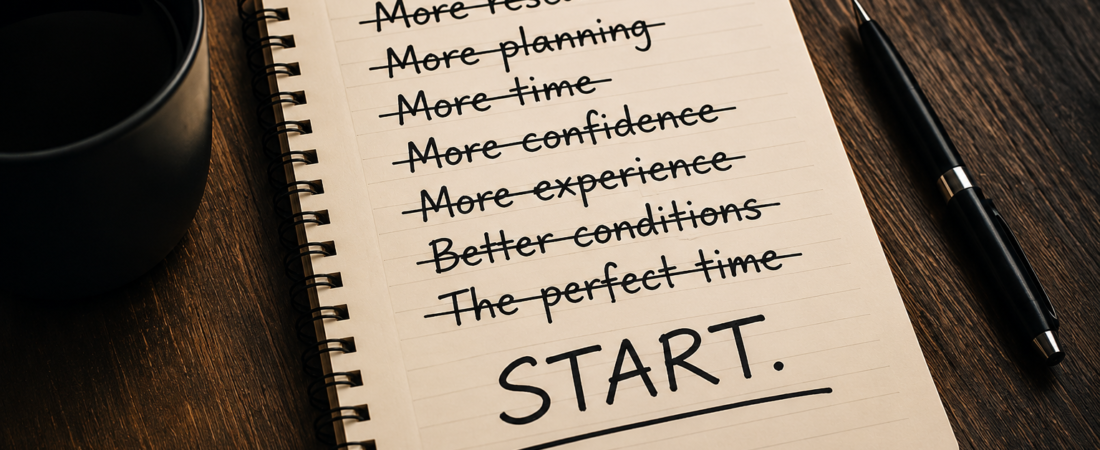
I do not think most people are actually waiting for the perfect time.
I think they are waiting to feel less afraid.
That is the real problem with waiting to feel ready.
They call it planning.
They call it preparation.
They call it being realistic.
They call it making sure everything is right before they start.
But a lot of the time, what they are really doing is delaying the moment where they have to step into uncertainty and find out what they are capable of.
I know this because I have done it myself.
Driven Tempo is probably the clearest example in my life right now.
This idea had been sitting in my head for a long time before I actually started building it. I wanted to create something around discipline, growth, fitness, mental resilience, intentional living, and the real pressure people deal with while trying to become better.
But for a long time, I kept hesitating.
Not because I did not care about the idea.
Because I did not feel ready.
I did not know if anyone would care about the articles. I did not know if the brand would make sense to people. I did not know if the content would connect. I did not know if I could build something people would actually want to follow, read, watch, or be involved with.
And if I am being honest, part of me wanted confidence before I started.
But that is not how it works.
Confidence usually does not show up before the first step.
Most of the time, confidence is built because you take the first step while you still feel uncertain.
Readiness Can Become A Disguise For Fear
I have always had a tendency to overanalyze.
When I care about something, I want the plan to be solid. I want to know what I am doing. I want to feel like I have thought through every possible outcome before I begin.
On the surface, that sounds responsible.
But there is a fine line between preparation and avoidance.
Sometimes planning is necessary.
Other times, planning becomes a socially acceptable way to procrastinate.
That is where people get stuck.
They convince themselves they are not starting because they need more information, more experience, more confidence, more money, more time, or a better strategy.
But underneath all of that, the real fear is usually much simpler.
What if I fail?
What if people judge me?
What if I look stupid?
What if I put effort into this and nobody cares?
What if I find out I am not as good as I hoped I would be?
Those questions are uncomfortable, so people stay in preparation mode because preparation feels safer than exposure.
A lot of growth starts when we stop choosing comfort over action. I talk more about that idea in my article on why comfort quietly stops growth.
But staying in preparation mode too long can quietly steal years from people.
“A journey of a thousand miles begins with a single step.”
— Laozi
Action Teaches Faster Than Overthinking
The funny part is that I already know, from experience, that some of the biggest growth in my life happened when I jumped into something before I felt fully ready.
Project management is a perfect example.
When I transitioned into that field, I did not have years of experience in the industry. I did not have a long history of managing projects. I did not walk in feeling like some polished expert who had everything figured out.
I had to learn fast.
And honestly, that was probably one of the best things that could have happened to me.
Because when you are thrown into something new, you do not get the luxury of pretending forever. You have to adapt. You have to ask better questions. You have to make decisions. You have to deal with pressure. You have to learn from what works and what does not.
That kind of learning is uncomfortable, but it is real.
I grew quickly because I had to.
Eventually, I became capable of managing multiple projects at the same time, handling pressure, communicating with different groups, and making decisions with confidence.
But that confidence did not come before the work.
It came from doing the work.
That is the part people miss.
You do not become ready by thinking about the thing forever.
You become ready by stepping into it and letting the process shape you.
Confidence Comes From Repeated Action
For a long time, I thought confidence was something you needed before taking action.
Now I see it differently.
Confidence comes from repeated action.
It comes from doing something uncomfortable enough times that your brain eventually learns, “I can handle this.”
One of the easiest examples for me is speaking to stakeholders about problems.
There is nothing comfortable about standing in front of a group of people and telling them something they do not want to hear.
Difficult conversations are one of the clearest examples of this because nobody feels fully ready the first few times they have to deliver bad news, explain a problem, or speak honestly under pressure.
It is uncomfortable enough when it is one person.
It is even harder when it is a group of people who are frustrated, disappointed, or looking to you for answers.
The first few times I had to do that, it was rough.
I did not feel smooth.
I did not feel confident.
I did not have all the perfect words.
But each time I did it, I learned.
I learned what kinds of reactions to expect.
I learned how to stay calmer.
I learned how to explain the reasoning behind decisions.
I learned how to answer questions without becoming defensive.
I learned that people may not always like the message, but they respect clarity more than avoidance.
That is how confidence is built.
Not by waiting until you are fearless.
By proving to yourself that you can operate while fear is still present.
Waiting Usually Makes Fear Bigger
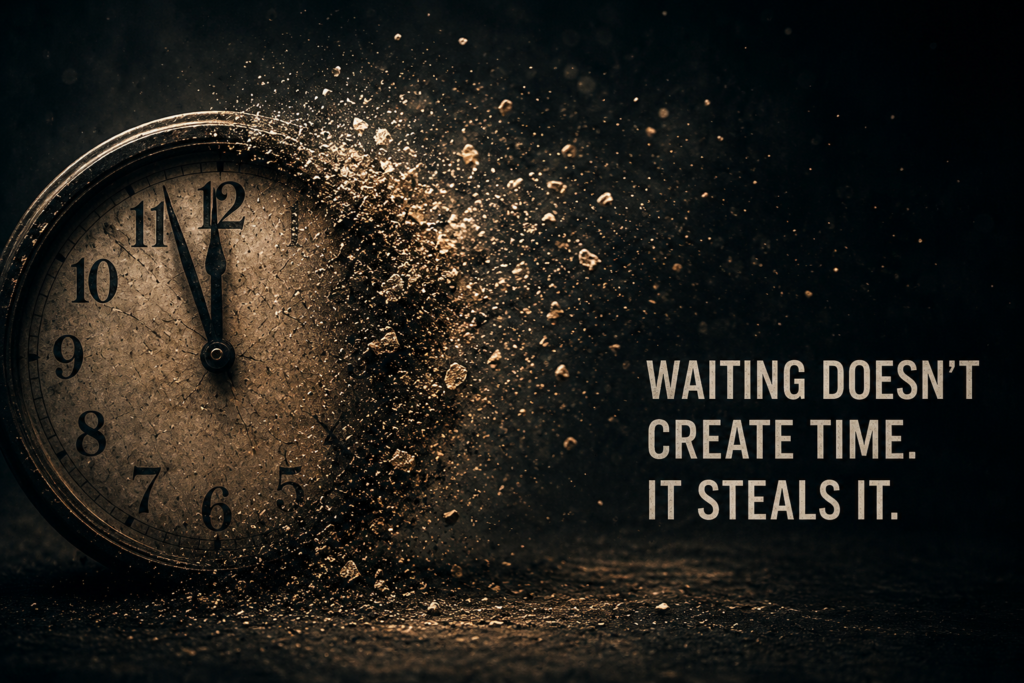
One of the biggest problems with waiting to feel ready is that waiting often makes the fear worse.
When you delay action, your mind keeps building the situation into something larger than it actually is.
You think about it while driving.
You think about it before bed.
You imagine all the ways it could go wrong.
You convince yourself you need just a little more time before you start.
That kind of mental loop is one reason modern life can feel so exhausting. The longer something stays unresolved, the more space it takes up mentally.
But most of the time, the pressure does not go away.
It grows.
I have felt this with Driven Tempo.
The longer I waited, the easier it was to overthink the idea.
What should the brand be?
What if the articles are bad?
What if nobody reads them?
What if I do not know enough yet?
What if I start and it fails?
But eventually, I had to accept something.
The only way to answer those questions was to start.
No amount of thinking was going to tell me whether the brand could become something meaningful. No amount of planning was going to create better articles without actually writing them. No amount of waiting was going to make me magically feel ready to put ideas into the world.
I had to start before I felt fully ready.
And I had to accept that the first version might not be perfect.
That is part of the process.
Failure Is Part Of Becoming Ready
I think people have the wrong relationship with failure.
They see failure as proof they were not ready.
But a lot of the time, failure is part of what makes you ready.
The early mistakes matter.
The bad articles matter.
The awkward videos matter.
The content that does not hit matters.
The uncomfortable conversations matter.
The decisions that do not go perfectly matter.
Those things give you feedback.
They show you what to improve.
They show you what people respond to.
They show you where your thinking is weak.
They show you where your skills need work.
That is not failure in the way most people think about it.
That is development.
Everyone starts somewhere. Everyone has a first version. Everyone has a stage where they are not as good as they want to be yet.
The problem is that most people want to skip that stage.
They want the confidence of experience without going through the discomfort of being a beginner.
But the beginner stage is where the growth starts.
Lost Time Is The Real Cost
When I look back at the times I waited too long to take action, the biggest cost was not failure.
It was lost time.
There have been plenty of moments where I finally started something and thought:
“Man, I should have done this way sooner.”
That feeling is frustrating because once you begin, you realize the thing was not as impossible as your mind made it seem. You still have to work. You still have to learn. You still have to fail and adjust.
But at least now you are moving.
Waiting can feel safe in the moment, but it has a cost.
Lost time.
Missed opportunities.
More anxiety.
More pressure.
More regret.
And sometimes the hardest part is realizing that the thing you were waiting to feel ready for was actually the thing that would have made you ready.
Starting Does Not Mean Being Reckless
I do not think people should be careless.
There is value in planning. There is value in thinking things through. There is value in preparation.
But preparation should eventually lead to action.
If planning never turns into movement, it becomes avoidance.
That is why discipline matters so much. It gives you enough structure to act before fear, overthinking, and uncertainty take control.
That is the difference.
Starting before you feel ready does not mean you abandon responsibility. It means you accept that certainty is not always available before the first step.
Sometimes you have to move with an incomplete plan.
Sometimes you have to learn in motion.
Sometimes you have to accept that clarity comes after action, not before it.
That is uncomfortable, but it is also where growth happens.
Driven Tempo Is Me Learning In Real Time
That is one of the reasons Driven Tempo matters to me.
I am not building this from a place of pretending I have everything figured out.
I am building it while I am still learning.
I know some articles may not connect.
Some content may not perform.
Some ideas may need to change.
Some strategies may fail.
Some things I try may not work at all.
But I also know that if I keep moving, keep learning, keep improving, and keep paying attention, those failures can become part of the foundation.
That is where discipline matters more than motivation. Motivation may help you start, but discipline is what keeps you moving when the early results are slow.
That is the part that excites me.
Not the possibility that everything works perfectly right away.
The possibility that consistent action, honest reflection, and willingness to fail could eventually build something meaningful.
That is why waiting to feel ready can be so dangerous.
Because if you wait until every fear disappears, you may never start.
Final Thoughts
The first step is rarely proof that you are ready.
It is the beginning of becoming ready.
Most people are not held back by a lack of potential. They are held back by the belief that they need to feel confident, prepared, and certain before they begin.
But confidence is usually earned after action.
Clarity usually comes after movement.
Growth usually starts before you feel fully prepared.
There will always be reasons to wait.
More planning.
More research.
More confidence.
More time.
A better moment.
But at some point, waiting becomes the thing keeping you from becoming the person you are trying to be.
You do not become ready by standing still.
You become ready by moving.
Pace your purpose. Drive your future.