A few years ago my wife and I rented a cabin in the woods for several days with no cell service.
No notifications.
No emails.
No social media.
No constant stimulation.
At first, the silence felt strange.
Not peaceful. Not relaxing. Just… unfamiliar.
I kept instinctively reaching for my phone even though there was nothing to check. It almost felt like my brain was searching for stimulation out of habit. I didn’t fully realize how automatic that behavior had become until it suddenly disappeared.
The first night was uncomfortable.
No endless scrolling before bed.
No random notifications pulling my attention somewhere else.
No background noise constantly filling every quiet moment.
Just silence.
But by the second day, something started changing.
Time felt slower.
Conversations felt deeper.
Meals lasted longer.
The air somehow felt calmer.
Even my thoughts felt quieter.
And when we finally drove back home, something hit me almost immediately.
Nothing about my actual life had changed, but everything suddenly felt fast again.
The drive home felt rushed.
Notifications felt louder.
My thoughts felt scattered again.
It honestly bothered me how quickly my brain slipped right back into that overstimulated state.
That trip made me realize something I still think about constantly:
Most people never truly feel present anymore.
Life Constantly Pulls Our Attention Somewhere Else
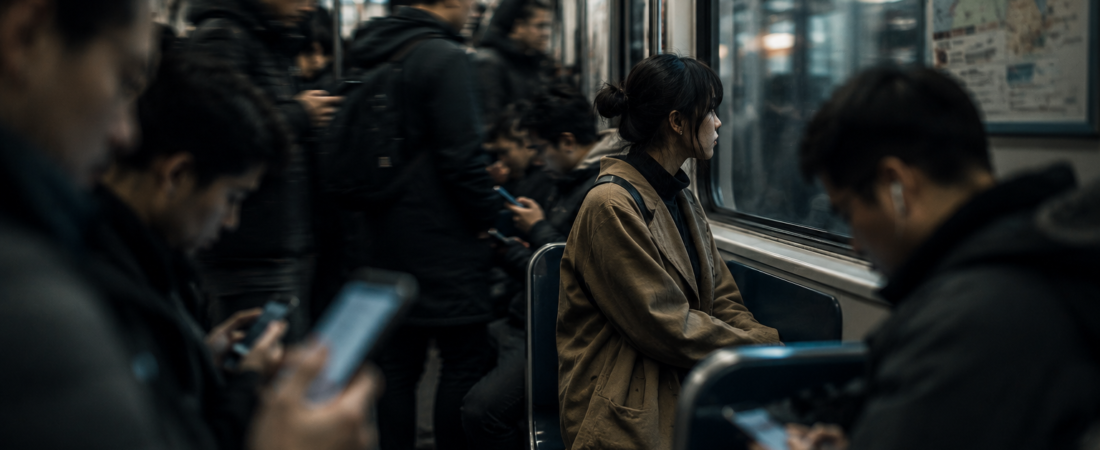
I think one of the biggest problems in modern life is that our attention is constantly being divided.
Notifications.
Emails.
Social media.
Texts.
Work calls.
Videos.
Short-form content.
Algorithms designed to keep us scrolling endlessly.
Everything competes for our attention all day long.
And after a while, I think people stop realizing how mentally loud life has become because the chaos starts feeling normal.
One thing I’ve noticed personally is that social media speeds up life psychologically.
It creates this constant feeling that:
- you should be doing more,
- moving faster,
- achieving more,
- chasing something bigger,
- or getting to the next stage of life as quickly as possible.
A lot of people are so mentally focused on the next destination that they stop fully experiencing the moment they are currently living in.
And honestly, I catch myself doing this too.
Sometimes I look back on old memories and think:
“Those were the good times.”
But the strange part is that while I was living through those moments, I was usually too distracted, stressed, or too mentally focused on the future to fully appreciate them while they were actually happening.
That realization hit me hard.
“Forever is composed of nows.”
— Emily Dickinson
Modern Life Rewards Distraction
I honestly believe modern life rewards distraction.
Some of the smartest people in the world spend their careers trying to figure out how to keep people hooked to constant stimulation through:
- notifications,
- doom scrolling,
- algorithms,
- short-form videos,
- and quick dopamine hits.
The goal is always more engagement.
More clicks.
More screen time.
And honestly, I don’t think most people fully realize how much this slowly changes the brain over time.
A lot of modern overstimulation comes directly from social media, constant notifications, and fragmented attention. I dive deeper into that in my article on why social media is destroying focus.
Attention gets fragmented.
Focus becomes harder.
Patience gets weaker.
Silence starts feeling uncomfortable.
After a while, even sitting quietly for a few minutes can feel mentally difficult because the brain becomes so used to constant stimulation.
I’ve felt this in my own life too.
There have been times where I’ll instinctively unlock my phone without even knowing why I picked it up in the first place. It becomes automatic.
That’s the scary part.
Comparison Quietly Changes How We See Ourselves
I also think social media has completely distorted people’s perception of reality.
Everyone shows:
- the best moments,
- the best accomplishments,
- the best vacations,
- the best photos,
- and the best parts of their lives online.
We compare our everyday lives to carefully selected highlights from someone else’s.
The problem is that even people who appear to have “perfect” lives online are often dealing with the exact same things we are:
- stress,
- anxiety,
- burnout,
- insecurity,
- pressure,
- and comparison.
I honestly think comparison is one of the biggest reasons so many people struggle mentally today.
People are constantly chasing a version of life that often isn’t even real.
Presence Feels Different
The moments where I feel most present are usually very simple ones.
Being outside in nature.
Training in the gym.
Reading.
Silence.
Conversations with family and friends where my mind is fully there instead of being pulled in five different directions.
To me, being truly present means listening to understand someone instead of waiting for your turn to respond while thinking about something else in your head.
That kind of presence feels rare now.
I also think silence is massively underrated.
There’s something mentally calming about sitting outside, hearing nature, feeling the wind, and allowing your brain to slow down without constant stimulation being forced into it every few seconds.
I’ve also realized that intentionally slowing down and disconnecting from overstimulation is a huge part of mental recovery long term. That’s a big reason why recovery is part of discipline.
We need to turn the devices off every once in a while and reconnect with the natural pace of life.
Focus Creates Calm
One thing I’ve realized over time is that my best mental days usually happen when I can focus deeply on one thing at a time.
When I silence my phone, hide notifications, and focus completely on a single task, I feel calmer and more accomplished by the end of the day.
I honestly think multitasking is mostly nonsense.
Constantly switching attention between:
- notifications,
- work,
- messages,
- social media,
- and distractions
slowly destroys your ability to think deeply.
Focused attention feels completely different.
It creates clarity.
It creates calmness.
It creates presence.
And when your attention is constantly fragmented, it becomes much harder to feel mentally grounded.
Discipline and Self-Awareness Matter
I don’t think social media itself is entirely bad.
But I do think people need to become much more self-aware about how it affects their mental state.
For me personally, reducing overstimulation came down to discipline and honesty with myself.
A lot of improving habits like this comes down to discipline instead of waiting to feel motivated to change. I dive much deeper into that idea in my article on why discipline beats motivation.
I started noticing how much doom scrolling negatively affected my:
- focus,
- mood,
- anxiety,
- and attention span.
Eventually I realized I had to create healthier boundaries around it.
One thing that helped me a lot was turning off notifications completely for most social media apps.
I realized notifications almost create a feeling of permission to check your phone constantly.
Without those notifications, I became much more aware of when I was intentionally opening apps versus mindlessly reacting to stimulation.
That awareness alone made a huge difference.
Final Thoughts
I think a lot of people today are physically present somewhere while mentally being somewhere else entirely.
Modern life constantly pulls our attention in different directions, and over time that fragmentation quietly steals our ability to fully experience life while it’s happening.
Over time, constant stimulation and fragmented attention quietly create mental exhaustion that most people do not even realize they are carrying. I talk more about that in my article on why modern life feels mentally exhausting.
I don’t think the solution is completely abandoning technology or pretending social media doesn’t exist.
I think the real solution is becoming more intentional.
Protect your attention.
Slow down sometimes.
Focus deeply.
Be present in conversations.
Spend time in silence.
Reconnect with the natural pace of life.
Because at the end of the day, the things we consistently give our attention to eventually shape the quality of our lives.